The Ways In Which Vehicle Dynamics Telemetry Systems Eradicates Assumption within Chassis Tuning
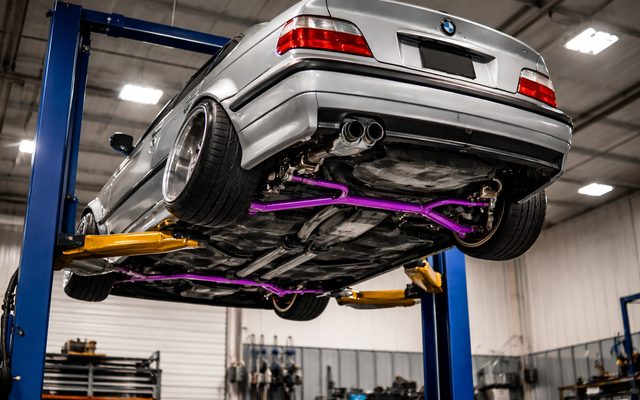
In the intensely competitive realm of modern professional oversteer competition, victory is no longer purely a product of sheer engine power or driver aggression. Rather, it has become a multifaceted science which demands a scrupulous fusion of picking a inherently capable chassis, arming it with the highest-quality competition hardware, and, most importantly, understanding its live performance on the track through cutting-edge vehicle dynamics analysis tools. This exhaustive handbook functions as your master plan starting from the initial idea of a project car through to the final telemetry-optimized adjustments that elevate a strong vehicle into a predictable champion. We will examine in detail the methodical process of vehicle alignment optimization, showing how a state-of-the-art drift tuning app like a dedicated telemetry system eradicates guesswork and provides unmatched visibility into your chassis's real-world performance.
The foundation of any great drift machine is, undoubtedly, the base vehicle itself. Several vehicles have attained renowned status within the global drifting community due to their inherent weight distribution, strong build quality, and the immense range of performance parts available. Choosing the correct car is the first and most crucial decision a builder will make. For instance, the BMW E36 is widely regarded as one of the greatest balanced cars for drifting of the modern era. Its almost ideal balanced front-to-rear weight, combined with a rear-wheel-drive layout and robust six-cylinder powerplants, creates a car that is at once easy to handle for newcomers and incredibly effective in the hands of a professional driver. The successor of this lineage, the E46 model BMW, builds upon these qualities with a even more refined structure, broader stance for greater stability, and even more turning capability straight from the OEM. A different formidable option in the professional scene is the C6 generation Corvette.
This American track weapon introduces a unique combination of strengths to the sideways sport, such as a light aluminum structure, a rear-mounted gearbox and differential unit that helps create an ideal balance, and the immense low-end power of a large-displacement LS V8 motor. This combination makes it an complete weapon on track, designed of starting and sustaining continuous drifts with seemingly effortless use of throttle. For those looking for exceptional performance per dollar, the 350Z model Nissan rises above as a prime example. It is delivered from the manufacturer with a stiff platform, a competent OEM LSD, and the responsive VQ35DE motor that delivers sufficient performance for practicing and moving up in the sport. Its successor, the 370Z model, presents further improvements in structural rigidity, steering geometry, and outright engine output, cementing its place as a favorite selection among competitive drivers. Further historic platforms that deserve mention are the lightweight unique Mazda FC, the most popular S13 Silvia/240SX, the V8-powered SN95 generation Mustang, the electronic-equipped E90 3 Series, and the small yet incredibly engaging and instructive Mazda MX-5. Each of these cars provides a unique palette of attributes, difficulties, and possibilities, but they all have in common the basic elements essential to be transformed into a competitive sliding vehicle.
However, selecting the optimal car is only the beginning. To access the complete potential of any of these machines, substantial changes to the steering and chassis control systems are completely essential. This is where the domain of specialist drift-spec components enters sharp view. The one most transformative improvement for a dedicated drift machine is the installation of a high-performance steering angle kit. These engineered kits, such as those developed by specialist companies like specialist manufacturers, are created to radically increase the vehicle's possible lock-to-lock rotation. A OEM road car is highly restricted in how far its steering tires can turn, a safety limitation for public road use. In drifting, however, aggressive opposite lock is frequently needed to manage and hold a slide. An steering kit replaces the factory uprights, linkages, and sometimes suspension arms with components that enable the front tires to reach steering lock beyond 70 or even 80 degs, versus a normal OEM setting of around 40 to 50 °.
This vastly increased lock offers the operator with dramatically more command during a angle, making it much simpler to start a slide, sustain it through a sweeping bend, and transition smoothly from one angle to the other. The difference in controllability is truly profound. Paired with a correctly selected steering kit is the every bit as vital upgrade to the car's spring and damper setup. Store-bought or even premium road adjustable suspension are generally not intended for the unique and brutal requirements of sliding. A drift-spec system of coilovers is of utmost importance. These engineered dampers incorporate specific piston tuning and spring stiffness that are optimized for the violent load shifting that is characteristic of aggressive driving. When a driver initiates a angle, the chassis's mass is thrown violently to the front of the turn. Correct competition suspension handle this movement in a controllable manner, allowing the car to stabilize quickly and offering the operator precise feel through the wheel and seat. They additionally enable exact setting of stance, rebound and compression firmness, and cross-weight, which are all integral elements of dialing in the car's handling to a given venue or competition technique. Together, a top-tier angle modification system and a properly chosen pair of drift-spec suspension units are the undeniable hardware cornerstone upon which all subsequent tuning is constructed.
Once the essential components is fitted, the following vital step in the build is the detailed tuning of the chassis's alignment. This is the realm of vehicle alignment optimization, a methodology that can seem intimidating to the uninitiated but is, in fact, the key to converting a set of fast components into a harmonious and predictable vehicle. The most critical aspect of alignment for sliding is definitely camber. Camber angle is the angle of the wheel relative to the perfectly straight line when observed from the forward of the vehicle. When the top of the wheel is leaning towards the chassis, this is called negative camber. For sliding, inward-leaning wheels on the front wheels is universally used and is regarded as necessary. The logic is intrinsically tied to tire contact.
When a chassis is cornering at extreme sideways angles, the frame tilts towards the outer of the corner. This chassis roll makes the outside front tire to lose its optimal contact patch with the tarmac. By introducing negative camber, the tire is pre-angled to compensate for this lean. As the vehicle leans into the bend, the outside front tire gains a better contact patch on the track, maximizing its traction at the car alignment tuning precise point when it is absolutely essential for steering authority. Typically, front axle camber settings for a serious drift machine fall between approximately -3 degrees to as extreme as -5 degrees or even beyond, based on the specifics of the car setup, rubber choice, and pilot preference. The rear axle wheels also use negative camber, but the values are usually more modest and subtler than the front axle. Overly aggressive inward lean at the back can cause the vehicle to overly prone to oversteer and difficult to manage on acceleration application, as it diminishes the effective grip area of the driving wheels during forward acceleration. Thus, rear axle camber settings are frequently in the ballpark of -1 degree to -3 degrees, finding a precise compromise between providing enough side bite to help in initiating and holding the angle while simultaneously keeping good grip for power-down the corner. Camber is just one element of the larger alignment puzzle, which also involves toe, self-centering steering, and steer correction modification.
Toe angle is the angle of the tires when looked at from a bird's-eye view. Positive toe means the leading edges of the wheels are closer together than the trailing edges, while negative toe means the opposite. For drifting, a small amount of front toe out is often run to sharpen the initial handling feel, making the car feel more agile and willing to start a drift. Rear toe setting is typically set to neutral or a extremely slight amount of positive toe to encourage stability under acceleration. self-centering is the frontwards or aft inclination of the steering axis when observed from the side-on of the vehicle. Increased caster enhances feedback and high-velocity stability, and it furthermore boosts inward lean increase during steering, which is highly useful. Setting these settings is a complex dance where a modification to a single parameter can and will affect the remaining parameters. The old-school method for setting a car's suspension geometry for competition has for a long time been a labor-intensive affair of trial and error. A driver or crew would make a change based on experience, test the car on track, depend on the pilot's subjective feel and feedback, and then introduce a further tweak. This process would iterate again and again until the vehicle felt "right" or the allotted testing time was exhausted. This approach is not just incredibly slow in terms of time and costs, but it is additionally inherently inaccurate.
Human feel is a famously subjective measurement tool, colored by countless elements such as fatigue, varying track conditions, temperature, and just the mood of the pilot on that given day. What feels "oversteery" on one pass might feel "tight" on the next pass, leading to conflicting data and ineffective changes. This traditional challenge in vehicle dynamics optimization is specifically where modern telemetry systems has made its mark to revolutionize the landscape.
The advent and integration of sophisticated drift telemetry software has brought about a radically different paradigm for tuning and perfecting professional sliding vehicles. These tools, represented by innovative systems like modern telemetry hardware, function by directly recording the actual mechanical movement of the chassis as it is being driven on the course. In contrast to depending on subjective impression, these tools acquire objective metrics on essential factors such as shock absorber movement, individual tire rotation, G-force loading, lock position, and accelerator and brake pedal application. This raw telemetry is then analyzed by powerful applications that can plot and analyze the data in a comprehensible format. For the very first time, engineers and crews can visualize exactly what the car is performing at every millisecond of a drift. This capability revolutionizes the complete alignment optimization procedure. Consider the specific challenge of dialing in the front axle camber for a given car. Instead of making a adjustment from -3 degrees to -3.5 degrees and then testing many runs to try and "perceive" a difference, a vehicle dynamics tool can give immediate and clear data. The application can indicate in a chart how the wheel's loading is behaving during the key stages of a angle: the initial flick, sustain, and transition. It can show if the current value is enabling the outside front tire to achieve maximum loading or if the rubber is over-stressed on its outer edge.
The system can then make data-driven suggestions for adjustment. Perhaps the information reveals that the outside front tire is still stressing its edge at -3.5 degrees of camber, suggesting that even more negative camber, say -4 degrees, might be warranted. Alternatively, the information might indicate that the tire is failing to achieving heat or that the inside shoulder is wearing unevenly, which could indicate that there is excessive negative camber and a slight reduction back to -3.2 degrees would be more efficient. This standard of suspension engineering granularity and actionable intelligence was literally impossible in the time of pure manual setup.
The impact of utilizing a advanced drift telemetry system extends well beyond just optimizing camber angles. It serves as an essential coilover setup tips that is tailored to your specific vehicle. When fine-tuning the shock absorber clickers on your suspension, rather than relying on imprecise guidelines or copying another driver's setup, you can utilize the software to observe how the chassis is reacting in reaction to your changes. The application can graph the suspension travel path over a section of track, revealing if the shocks are managing the chassis motion optimally or if they are allowing the car to oscillate uncontrollably after a flick. It can aid in diagnosing problems like excessive compression or excessive extension, allowing you to apply educated decisions to preload settings, rebound/compression values, or stance. This process translates similarly to the complex task of suspension geometry optimization. In addition to camber angle, the system can provide insight into how changes to toe and caster are influencing the chassis's balance during various phases of a drift. For instance, it can allow you to determine the ideal amount of front axle toe out for your individual steering geometry and driving approach by analyzing the quickness of initial response and the consistency of the vehicle at lock countersteer. This transforms the system an extremely effective performance car alignment tuning optimization handbook that is constantly informed by the live behavior of your specific chassis on the circuit. It shifts the complete process from a mysterious craft into a scientific development exercise.
Moreover, the utility of a tool like modern telemetry is in no way limited to professional engineers with large budgets. For the amateur enthusiast, it acts as an amazing educational tool. It effectively provides the driver with the insight of a professional dynamics engineer without needing the associated cost. It speeds up the tuning process by delivering clear answers to problems that would otherwise take countless track days of trial and error to answer. A builder can understand how their particular chassis responds to various settings, gaining a deeper knowledge of car control in the process. It also democratizes professional suspension engineering techniques, permitting anyone with the ambition to optimize their car to do so in a systematic and productive way. This is particularly valuable in a discipline like sliding, where setup expertise has in the past been a tightly held advantage among top crews. Now, that capability can be in the toolkit of any serious builder.
In conclusion, the path to constructing and tuning the perfect high-performance drift car is a comprehensive endeavor that perfectly blends proven hardware wisdom with 21st-century data tools. It commences with the informed pick of a legendary car, followed by the installation of critical performance components like drift-spec drift angle kits and properly selected performance suspension units. The journey then advances into the detailed realm of chassis dynamics adjustment, where settings like camber, toe, and caster angle are precisely adjusted to suit the chassis's upgraded geometry and the pilot's individual style. The final step, and what genuinely differentiates the modern approach from the old ways, is the use of a powerful suspension tuning application. This platform removes the guesswork and inefficiency of purely seat-of-the-pants setup by delivering objective, actual information on how the chassis is truly behaving. It functions as an incredible suspension tuning tool, a comprehensive alignment optimization handbook, and a comprehensive vehicle dynamics tool. In unison, this holistic philosophy guarantees that each and every element of the drift machine—from the selection of the platform to the final tweak on the suspension—is refined for ultimate success on the track. It embodies the total evolution of the discipline of drifting, merging raw driving skill with surgical vehicle setup to create the perfect effective machines imaginable.